Bossam Pork with Chive Salad & Tofu Doenjang Sauce
돼지고기 수육 부추부침
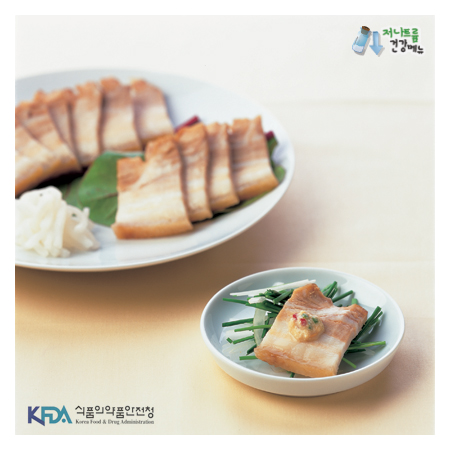
Tender boiled pork belly sliced thin and served with spicy balsamic garlic chive salad, pickled radish and a low-sodium dipping sauce of mashed tofu and doenjang. The tofu stretches the doenjang, using about a fifth less paste.
🥘 Ingredients
Tap an ingredient to check it off.
Main
Spicy sauce
Tofu doenjang sauce
🧺 Korean ingredients in this recipe
- Korean Green Onions (Pa)Thick daepa, slender jjokpa and the green onions in almost every dish
- Garlic in Korean CookingMinced, sliced, pickled and black — the backbone of Korean flavor
- Ginger in Korean CookingFresh ginger, ginger juice and ginger syrup for marinades and teas
- Garlic Chives (Buchu)Flat garlic chives for pancakes, kimchi and dumplings
- Korean Radish (Mu)Dense, sweet, crunchy Korean radish
- Korean VinegarsBrown rice, persimmon and fruit vinegars for dressings and pickles🛒 Shop on Amazon
- Korean Soy Sauce (Ganjang)Guk-ganjang, jin-ganjang and when to use each🛒 Shop on Amazon
- Tofu (Dubu)Firm, soft and silken tofu in Korean cooking
- DoenjangRustic fermented soybean paste🛒 Shop on Amazon
- Korean Chili PeppersFresh green and red chilies, from mild to Cheongyang
As an Amazon Associate, coo K food earns from qualifying purchases.
📘 Cooking basics for this recipe
📝 Step-by-Step Instructions
Boil the pork belly in one piece with the green onion, garlic, ginger and peppercorns until very tender.

Cut the chives and onion into 3 cm lengths and toss lightly with the spicy sauce.

Julienne the radish, pickle in the salt, sugar and vinegar and squeeze dry.

Remove the pork and slice thinly.

Plate the pork with the chive salad and pickled radish.

Finely mash the tofu and mix with the doenjang sauce ingredients to serve with the pork.

📊 Nutrition Facts (per serving)
Nutrition values are taken from the original recipe data and are approximate.
🎥 Watch Cooking Videos
▶Search “Bossam Pork with Chive Salad & Tofu Doenjang Sauce” on YouTubeFind cooking videos, tutorials, and tips→Source: adapted from the recipe database of the Ministry of Food and Drug Safety of Korea (Food Safety Korea), used under the Korea Open Government License (KOGL) Type 1. English translation and editing by coo K food.
🍽️ You Might Also Like
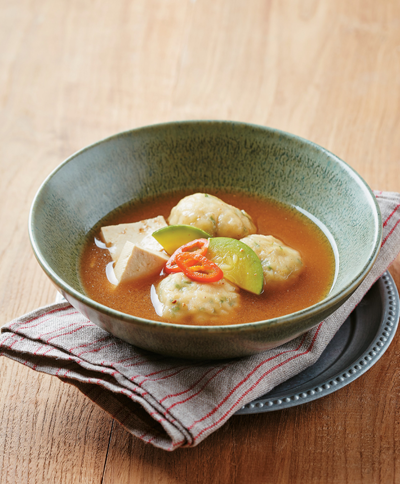
Doenjang Soup with Rolled Dumplings (Gullim-mandu)
굴림만두된장국

Mushroom Soft Tofu Stew
버섯순두부찌개
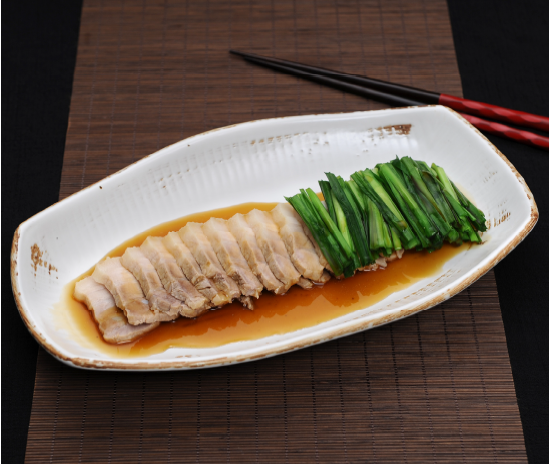
Steamed Pork Belly with Garlic Chives & Ginger Soy Glaze
삼겹살부추찜
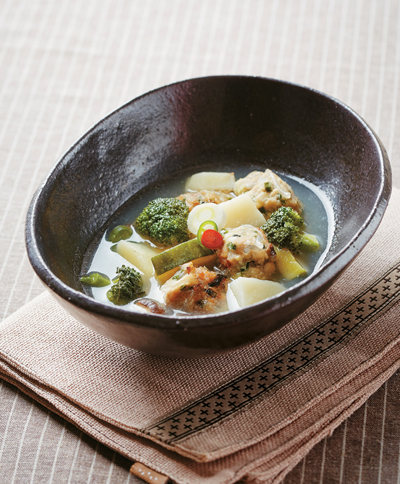
Doenjang Soup with Pork & Tofu Meatballs
완자된장국
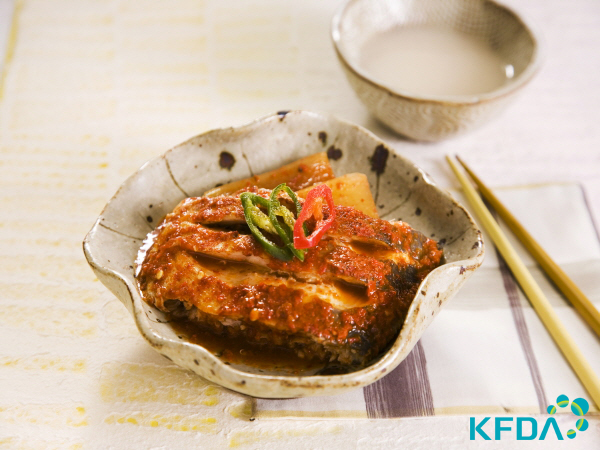
Braised Butterfish with Radish (Byeong-eo Jorim)
별미병어조림
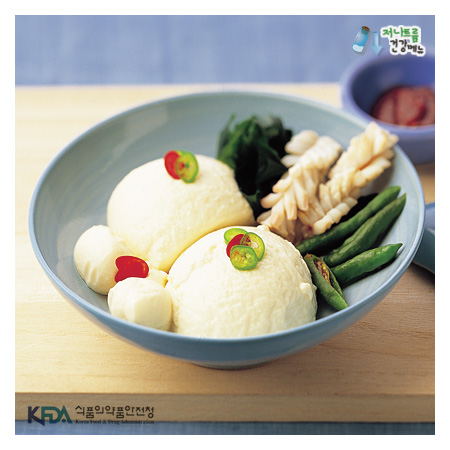
Seaweed, Squid & Silken Tofu Chohoe
미역 물오징어 연두부 초회