Doenjang
된장dwen-jang
Rustic fermented soybean paste
Doenjang is a dense, brown paste of fermented soybeans and salt. Its earthy, funky, deeply savory flavor is the backbone of everyday Korean soups and stews, and its smell is, for many Koreans, the smell of home cooking.
- Korean name
- 된장 (dwen-jang)
- What it is
- Rustic fermented soybean paste
- Storage
- Keep it in the refrigerator with the surface pressed flat.
- Substitute
- Red (aka) miso is the closest substitute — use a little more and add it toward the end.
- Recipes
- Used in 57 recipes on coo K food
How doenjang is made
Soybeans are boiled, mashed and shaped into blocks called meju, which are dried and left to ferment with naturally occurring molds and bacteria for several weeks. The meju is then submerged in salt brine for one to two months. The liquid is drawn off and becomes soup soy sauce (guk-ganjang); the softened solids are mashed and aged further to become doenjang. Doenjang and guk-ganjang are siblings from the same jar.
Doenjang vs. miso
Both are fermented soybean pastes, but doenjang is usually made from soybeans alone, without the rice or barley koji used for most miso, and it is aged longer. The result is chunkier, saltier and much more pungent. Miso is smoother and sweeter and is usually added at the end of cooking; doenjang stands up to long simmering, and its flavor actually rounds out as it bubbles.
How it is used
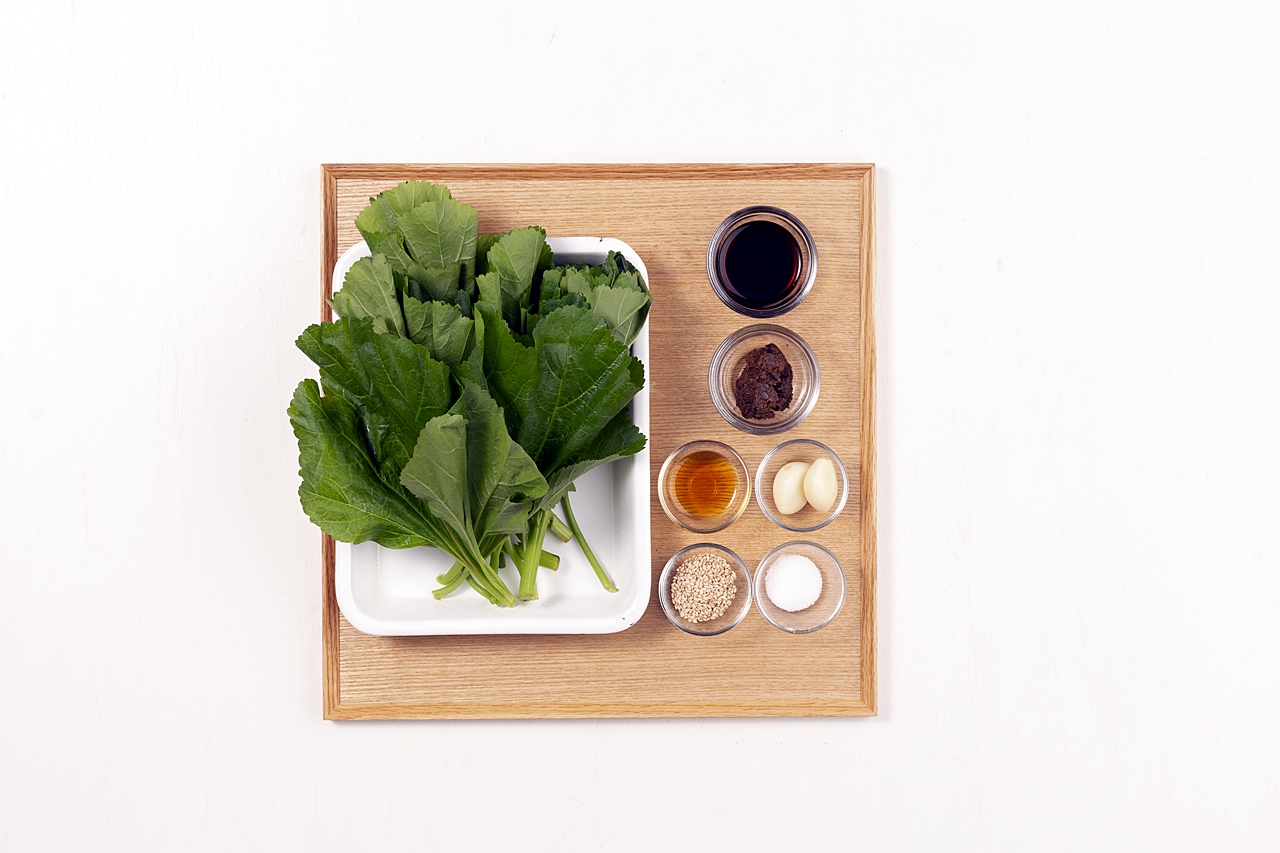
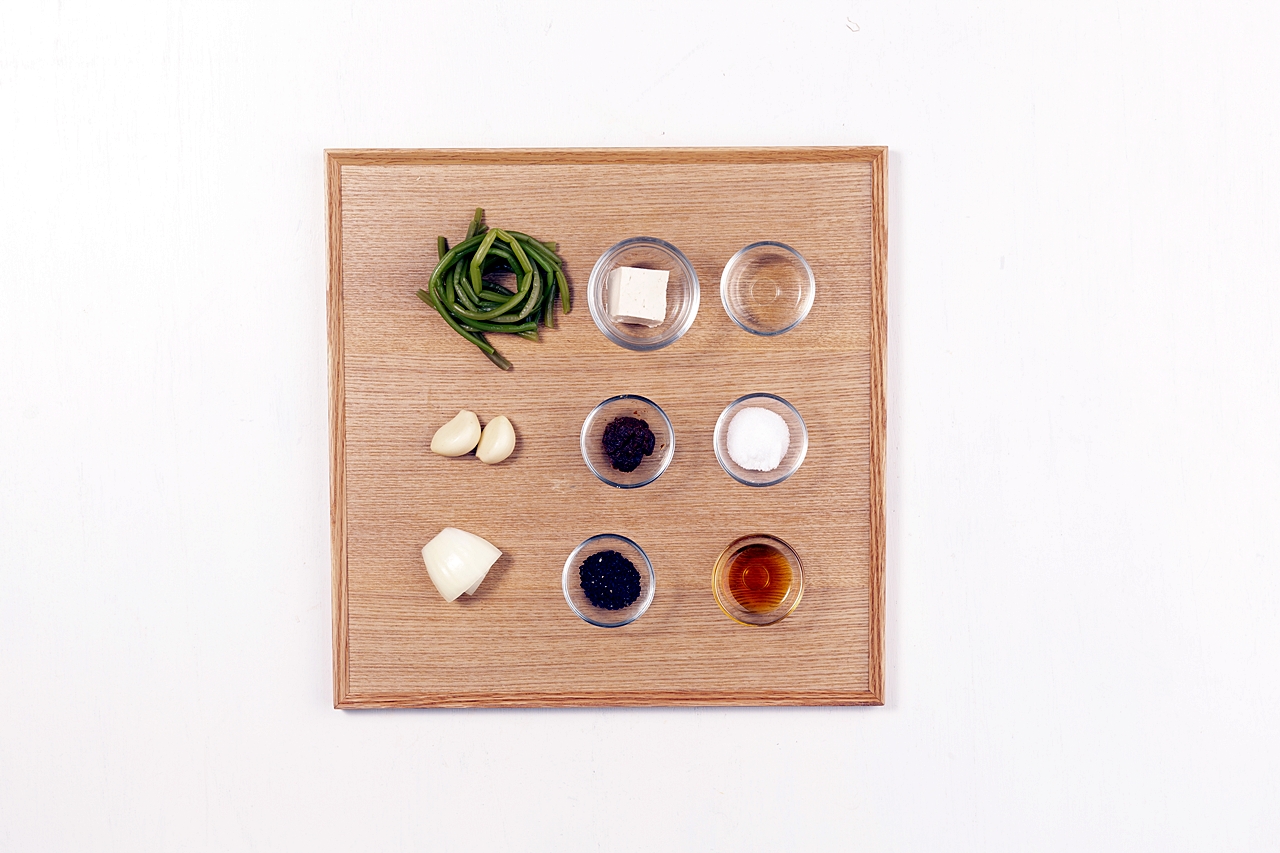
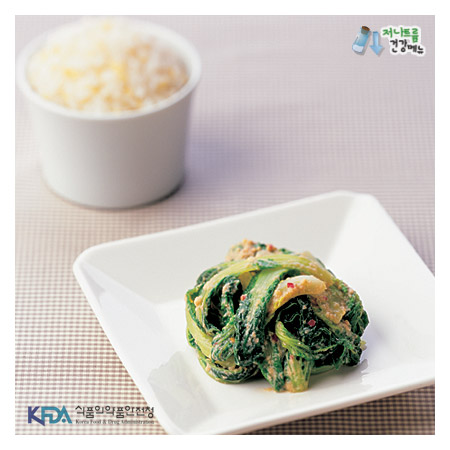
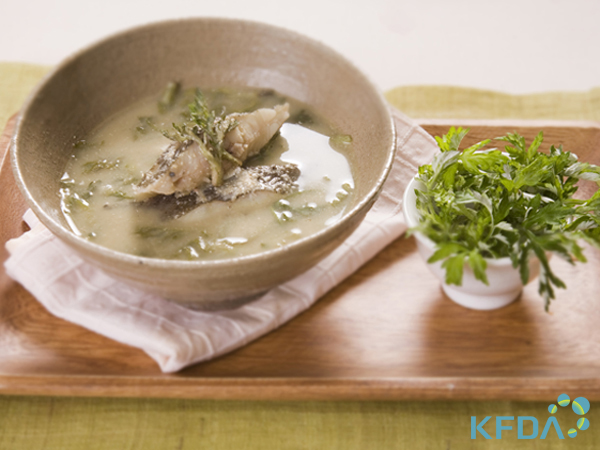
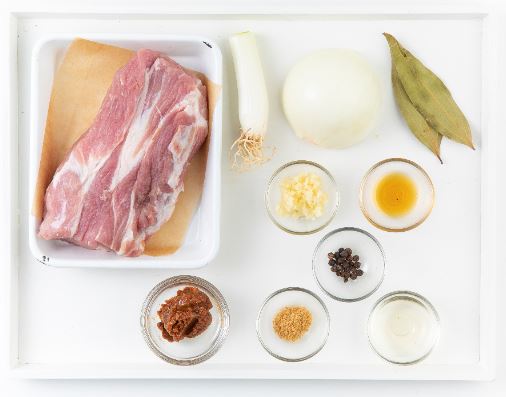
Doenjang-jjigae — a stew of tofu, zucchini, potato, onion and chili in anchovy broth — is the most famous use, followed by doenjang-guk, a lighter soup with spinach, napa cabbage or dried radish greens. It also seasons blanched namul (doenjang-muchim), is mixed with gochujang, garlic and sesame oil to make ssamjang, and goes into the water for boiling pork belly, where it removes porky odors.
Cooking with less salt
Doenjang is one of the saltiest jang. Recipes on this site often use a low-sodium doenjang, build flavor with kelp or anchovy broth so less paste is needed, or dilute it with tofu and plenty of vegetables. Dissolving the paste through a small sieve into the broth also spreads it evenly, so a little goes further.
🧊 How to store it
Keep it in the refrigerator with the surface pressed flat. It lasts for many months, and will slowly darken and deepen in flavor.
🔄 Substitutes
Red (aka) miso is the closest substitute — use a little more and add it toward the end. Hatcho (soybean-only) miso is even closer in flavor.
🛒 Where to buy
Look for it at Korean or pan-Asian grocery stores such as H Mart, or order it online — it keeps well, so it is easy to stock up.
As an Amazon Associate, coo K food earns from qualifying purchases.