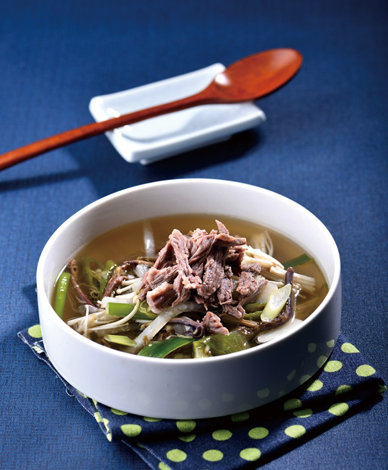
Yukgaejang (Spicy Shredded Beef Soup)
육개장yuk-gae-jang
A fiery, hearty soup of shredded beef, bracken and green onions
Yukgaejang is a bold, deeply red soup of slow-simmered beef brisket pulled into shreds, with fernbrake (gosari), bean sprouts and plenty of green onion, all seasoned with a chili oil made from gochugaru. It takes time, but most of it is hands-off simmering, and a large pot feeds many people and tastes even better the next day.
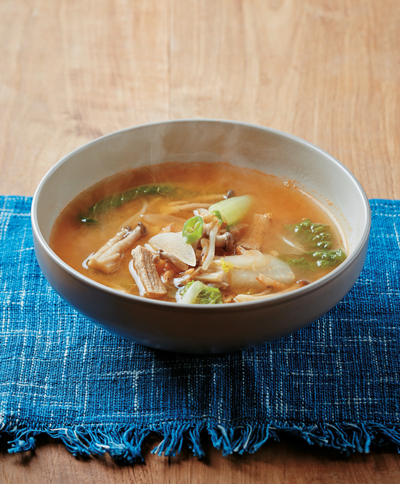
Looking for a twist? See 2 yukgaejang variations ↓
🥘 Ingredients for classic yukgaejang
Tap an ingredient to check it off.
Beef broth
Vegetables
Seasoning
Optional finish
🧺 Korean ingredients in this dish
- Korean Radish (Mu)Dense, sweet, crunchy Korean radish
- Garlic in Korean CookingMinced, sliced, pickled and black — the backbone of Korean flavor
- Korean Wild Greens & Mountain RootsBellflower root, deodeok, bracken and dried greens
- Bean Sprouts (Kongnamul & Sukju)Soybean and mung bean sprouts for soups and namul
- Korean Green Onions (Pa)Thick daepa, slender jjokpa and the green onions in almost every dish
- Korean MushroomsShiitake, enoki, king oyster and other everyday mushrooms🛒 Shop on Amazon
- GochugaruSun-dried Korean chili flakes🛒 Shop on Amazon
- Sesame Oil & Sesame SeedsThe nutty finishing touch of Korean food🛒 Shop on Amazon
- Korean Soy Sauce (Ganjang)Guk-ganjang, jin-ganjang and when to use each🛒 Shop on Amazon
- Dangmyeon (Glass Noodles)Chewy sweet potato starch noodles🛒 Shop on Amazon
As an Amazon Associate, coo K food earns from qualifying purchases.
📝 How to make yukgaejang
Soak the beef in cold water for 30 minutes to draw out the blood, then drain.
Put the beef, water, radish, onion and garlic in a large pot. Bring to a boil, skim off the foam, and simmer partly covered over medium-low heat for 1½ hours, until the beef is tender enough to pull apart.
Lift out the beef and let it cool slightly. Strain the broth (you should have about 8 cups / 1.9 L) and slice the radish if you used it. Shred the beef along the grain into thin strands.
Cut the gosari and green onions into 6–7 cm (2½ inch) lengths. Blanch the green onions for 1 minute if they are thick, so they turn soft and sweet.
In the empty pot, warm the cooking oil and sesame oil over low heat, add the gochugaru and stir for 30 seconds to make a red chili oil — do not let it burn.
Add the shredded beef, gosari, mushrooms, garlic and 2 tablespoons of the soup soy sauce and stir-fry for 2–3 minutes so they absorb the chili oil.
Pour in the broth, add the bean sprouts and green onions, bring to a boil and simmer for 20–30 minutes. Season with the rest of the soup soy sauce, salt and pepper.
If you like, add soaked glass noodles for the last 5 minutes and drizzle in the beaten eggs without stirring right away. Serve hot with rice.
💡 Tips for the best yukgaejang
- Seasoning the beef and vegetables before they go into the broth makes every bite flavorful, not just the soup.
- Making chili oil over low heat gives a clear, bright red color and a smoky aroma; a burnt oil turns the soup bitter.
- Dried gosari must be soaked and boiled until tender before use. Packets of pre-soaked gosari from Korean grocery stores save time.
- Yukgaejang keeps for 3–4 days in the fridge and freezes well. Leave out the eggs and noodles if you plan to store it.
What is yukgaejang?
Yuk means meat — here, beef — and the name refers to a beef version of gaejang, an older spicy soup. It is one of Korea’s classic hearty soups: rich from long-simmered beef, hot from chili oil and full of chewy, earthy fernbrake and sweet green onion.
Yukgaejang is the soup traditionally served to guests at Korean funeral halls, because a large pot can be prepared in advance and it keeps well. It is also eaten year-round at home and in restaurants, often in the summer heat as a way to sweat it out.
Yukgaejang vs. dakgaejang
Dakgaejang is the same soup made with chicken instead of beef. It is quicker — a whole chicken or thighs simmer in under an hour — and the shredded chicken takes the same spicy seasoning and vegetables.