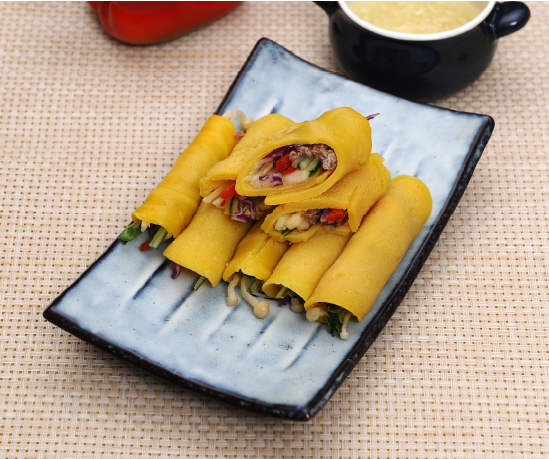
Kabocha Crepe Rolls with Beef & Vegetables
단호박소고기롤
Golden kabocha squash crepes rolled around soy-garlic beef, apple, enoki and crunchy vegetables, served with a tangy onion vinaigrette. The sweet squash crepe and fresh fillings provide great flavor even with little sodium.
🥘 Ingredients
Tap an ingredient to check it off.
Filling
Kabocha crepes
Sauce
🧺 Korean ingredients in this recipe
- Korean Soy Sauce (Ganjang)Guk-ganjang, jin-ganjang and when to use each🛒 Shop on Amazon
- Garlic in Korean CookingMinced, sliced, pickled and black — the backbone of Korean flavor
- Korean MushroomsShiitake, enoki, king oyster and other everyday mushrooms🛒 Shop on Amazon
- Kabocha Squash (Danhobak)Sweet squash that doubles as a natural sweetener
- Korean VinegarsBrown rice, persimmon and fruit vinegars for dressings and pickles🛒 Shop on Amazon
As an Amazon Associate, coo K food earns from qualifying purchases.
📘 Cooking basics for this recipe
📝 Step-by-Step Instructions
Cut the kabocha into eighths, scoop out the seeds and steam for 15–20 minutes until tender.

Julienne the beef, season with garlic, soy sauce and sugar, stir-fry and let cool.

Julienne the bell pepper, cucumber and red cabbage. Soak the radish sprouts briefly in water. Julienne the apple and soak briefly in sugar water. Trim the enoki and divide into small bunches.

Mix the minced garlic, onion, olive oil, sugar, vinegar and salt to make the sauce.

Peel the steamed kabocha, press it through a sieve, and mix with the flour, a little water and salt to make a batter.

Brush a pan with olive oil and cook a ladleful of batter at a time into crepes. Let them cool slightly, fill with the beef and vegetables, roll up and serve with the sauce.

📊 Nutrition Facts (per serving)
Nutrition values are taken from the original recipe data and are approximate.
🎥 Watch Cooking Videos
▶Search “Kabocha Crepe Rolls with Beef & Vegetables” on YouTubeFind cooking videos, tutorials, and tips→Source: adapted from the recipe database of the Ministry of Food and Drug Safety of Korea (Food Safety Korea), used under the Korea Open Government License (KOGL) Type 1. English translation and editing by coo K food.
🍽️ You Might Also Like
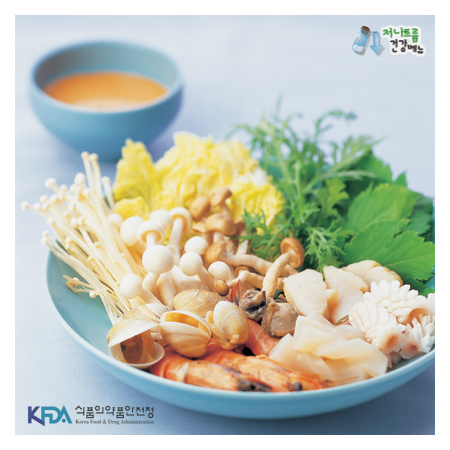
Seafood Shabu-Shabu with Sesame Peanut Dip
해산물 샤브샤브
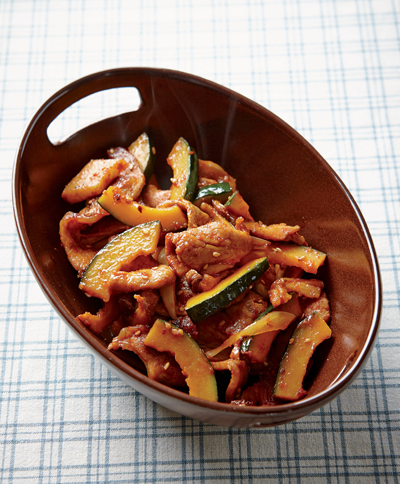
Spicy Pork Stir-Fry with Kabocha (Jeyuk-bokkeum)
단호박제육볶음
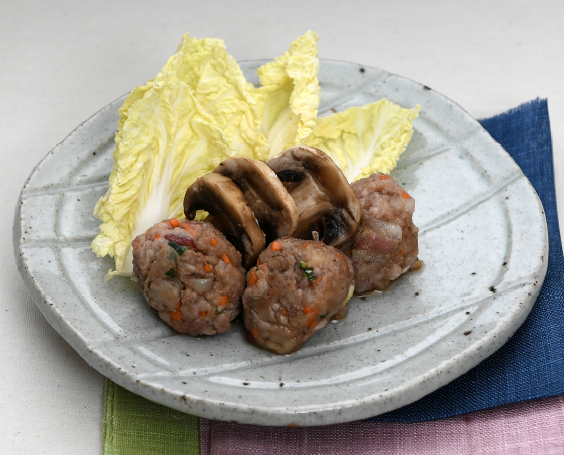
Ginseng Tteok-galbi (Korean Grilled Short Rib Patties)
인삼떡갈비
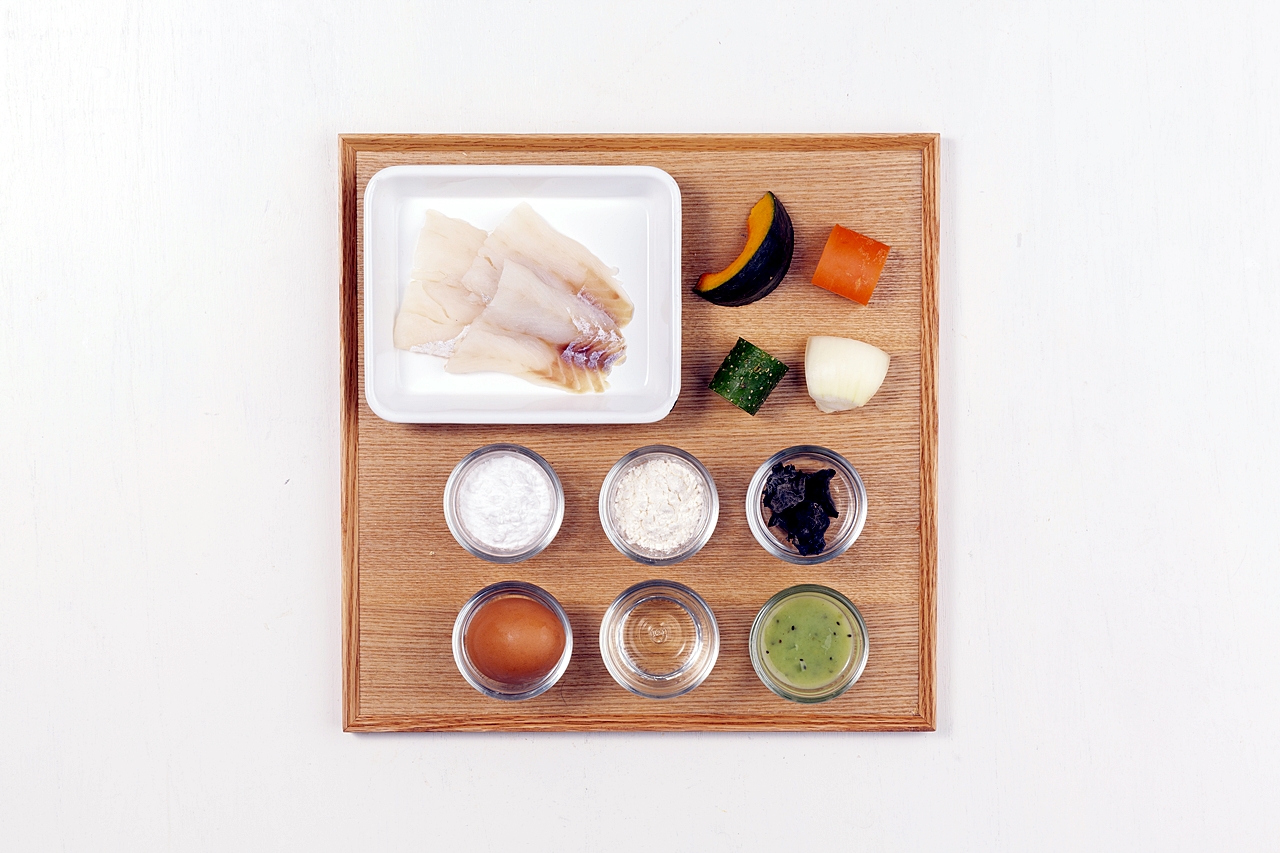
Sweet & Sour Pollock with Fried Kabocha and Kiwi Sauce
단호박 생선탕수
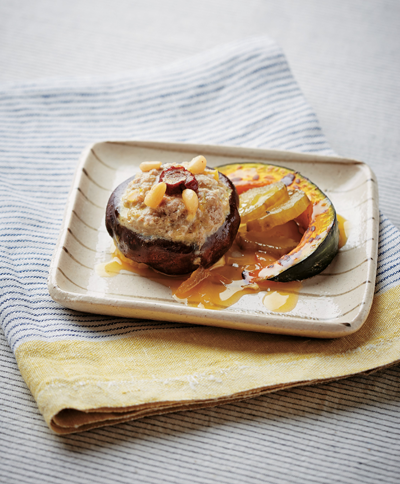
Steamed Beef-Stuffed Shiitake with Orange Sauce
쇠고기표고찜
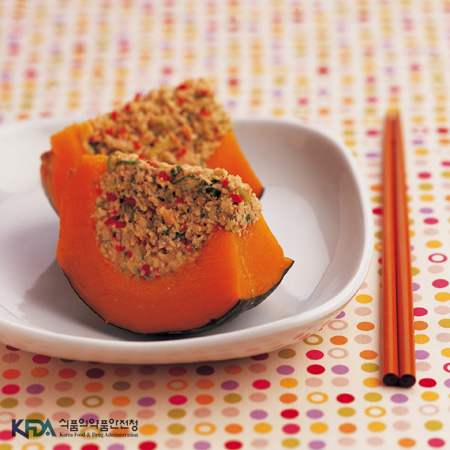
Steamed Stuffed Kabocha with Shrimp & Tofu
단호박 새우찜