Soy-Braised Eel with Perilla Leaves
장어조림
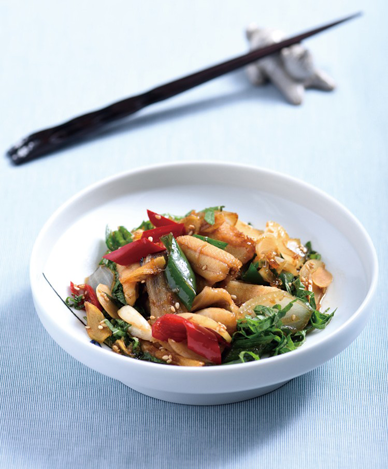
Bite-sized eel marinated in rice wine and white pepper, glazed in a garlic-soy sauce with ginger, onion and chilies and served on a bed of shredded perilla leaves. The aroma of fresh perilla balances the rich eel sauce.
🥘 Ingredients
Tap an ingredient to check it off.
Main
Sauce
🧺 Korean ingredients in this recipe
- Perilla Leaves (Kkaennip)Aromatic leaves for wrapping, pickling and frying
- Korean Chili PeppersFresh green and red chilies, from mild to Cheongyang
- Ginger in Korean CookingFresh ginger, ginger juice and ginger syrup for marinades and teas
- Korean Soy Sauce (Ganjang)Guk-ganjang, jin-ganjang and when to use each🛒 Shop on Amazon
- Rice Syrup & Oligosaccharide SyrupLiquid sweeteners for glossy glazes and braises🛒 Shop on Amazon
- Cheongju & Mirin (Cooking Wine)Rice wines that tame fishy and meaty odors🛒 Shop on Amazon
- Sesame Oil & Sesame SeedsThe nutty finishing touch of Korean food🛒 Shop on Amazon
- Garlic in Korean CookingMinced, sliced, pickled and black — the backbone of Korean flavor
- Korean Green Onions (Pa)Thick daepa, slender jjokpa and the green onions in almost every dish
As an Amazon Associate, coo K food earns from qualifying purchases.
📘 Cooking basics for this recipe
📝 Step-by-Step Instructions
Cut the eel into bite-sized pieces and marinate with white pepper and rice wine.

Julienne the perilla leaves, soak in cold water and drain.

Slice the ginger and garlic, and cut the onion and chilies diagonally.

Mix the sauce ingredients (except the sesame oil) with the sliced garlic and chopped green onion.

Braise the eel in half of the sauce.

Stir-fry the vegetables in the remaining sauce, add the braised eel and reduce. Serve on the perilla leaves, drizzled with sesame oil.

📊 Nutrition Facts (per serving)
Nutrition values are taken from the original recipe data and are approximate.
🎥 Watch Cooking Videos
▶Search “Soy-Braised Eel with Perilla Leaves” on YouTubeFind cooking videos, tutorials, and tips→Source: adapted from the recipe database of the Ministry of Food and Drug Safety of Korea (Food Safety Korea), used under the Korea Open Government License (KOGL) Type 1. English translation and editing by coo K food.
🍽️ You Might Also Like
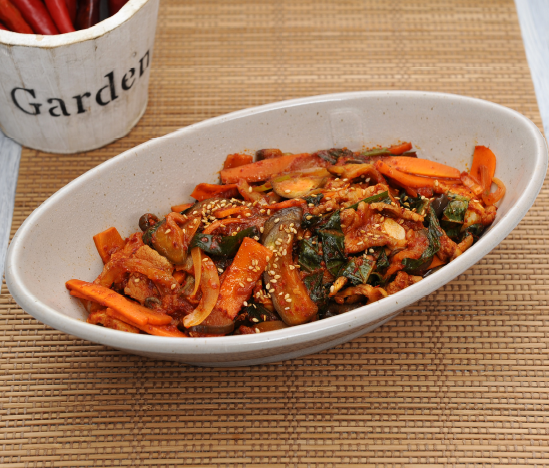
Spicy Pork Belly & Eggplant Stir-Fry
삼겹가지볶음

Beef Bulgogi with Vegetables & Pear
소고기채소불고기
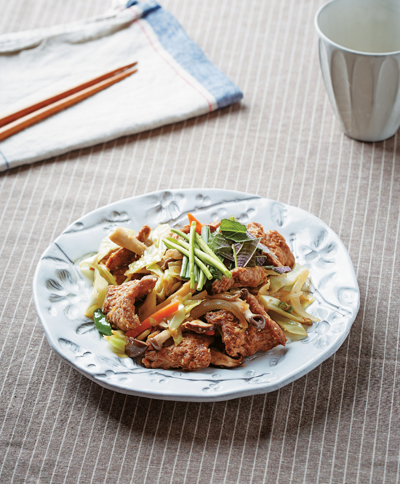
Mushroom & Soy Meat Bulgogi
버섯콩불고기
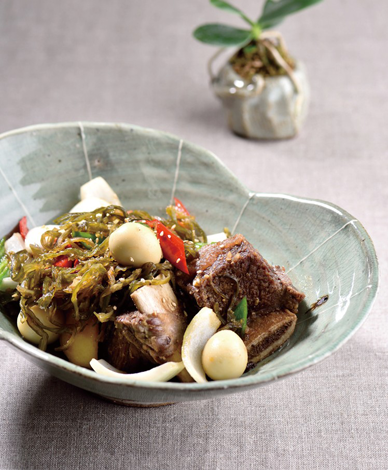
Braised Short Ribs with Seaweed Stems (Galbi-jjim)
해초갈비찜
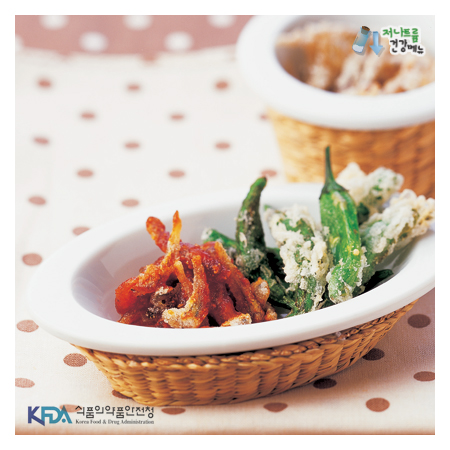
Crispy Anchovies & Peanuts in Gochujang Glaze
멸치 찹쌀양념 튀김
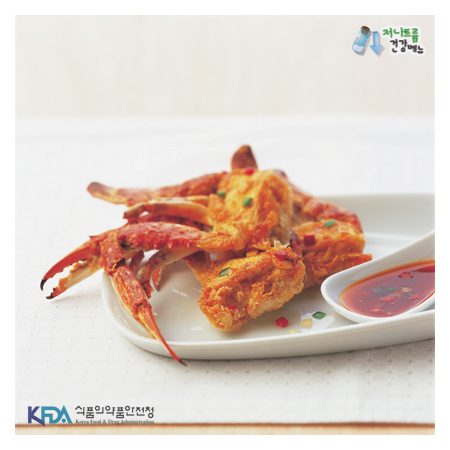
Crispy Blue Crab Gangjeong with Sweet Chili Glaze
꽃게강정