Perilla Leaves (Kkaennip)
깻잎kkaen-nip
Aromatic leaves for wrapping, pickling and frying
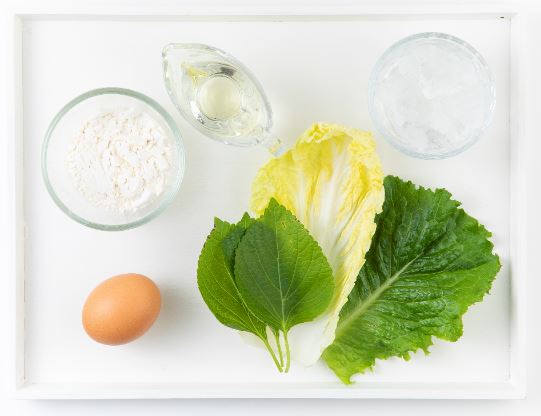
Kkaennip are the broad, serrated leaves of the perilla plant. They are often labeled "sesame leaves" in English, but they have nothing to do with sesame. Their bold scent — somewhere between mint, basil and anise — is unmistakable.
- Korean name
- 깻잎 (kkaen-nip)
- What it is
- Aromatic leaves for wrapping, pickling and frying
- Storage
- Wrap the stack in a damp paper towel and keep it in an airtight container in the fridge, stems down.
- Substitute
- Green shiso is closest.
- Recipes
- Used in 63 recipes on coo K food
Perilla vs. shiso
Korean perilla and Japanese shiso are varieties of the same species, but kkaennip is larger, rounder and more robust, with an earthier and less citrusy aroma than green shiso.
How it is used
Perilla leaves wrap grilled pork belly together with lettuce (ssam), are pickled in soy sauce (kkaennip-jangajji) or layered with chili seasoning (kkaennip-kimchi), stuffed with seasoned meat and pan-fried (kkaennip-jeon), and julienned over bibimbap, cold noodles and salads. They are also tossed into spicy stir-fries such as dakgalbi at the last minute.
Preparing them
Rinse each leaf under running water and shake it dry. To julienne, stack several leaves, roll them tightly and slice thinly — do it just before serving, because cut edges darken quickly.
🧊 How to store it
Wrap the stack in a damp paper towel and keep it in an airtight container in the fridge, stems down. They last about a week.
🔄 Substitutes
Green shiso is closest. Otherwise, use a mix of basil and mint.
🛒 Where to buy
This is a fresh ingredient, so it is best bought in person at a Korean or pan-Asian grocery store such as H Mart, or through an online Asian grocer that delivers fresh produce in your area. Look for it under its Korean name, 깻잎 (kkaennip).