Dried Anchovies (Myeolchi)
멸치myeol-chi
From broth anchovies to sweet-salty side dishes
Dried anchovies are sold by size, and each size has a job: large ones (dashi-myeolchi) for broth, medium ones for braises, and tiny ones (jiri-myeolchi) for sweet-salty stir-fries.
- Korean name
- 멸치 (myeol-chi)
- What it is
- From broth anchovies to sweet-salty side dishes
- Storage
- Keep them airtight in the freezer — at room temperature their oils go rancid.
- Substitute
- For broth, use bonito flakes, or fish sauce with kelp; for a vegetarian broth, shiitake and kelp.
- Recipes
- Used in 51 recipes on coo K food
Anchovy broth
Remove the heads and dark guts from large anchovies, since they can make broth bitter. Toast the anchovies in a dry pot for a minute, add water and kelp and simmer for 10–15 minutes, then strain. This broth is the base of noodle soups, doenjang-jjigae and kimchi-jjigae.
Myeolchi-bokkeum
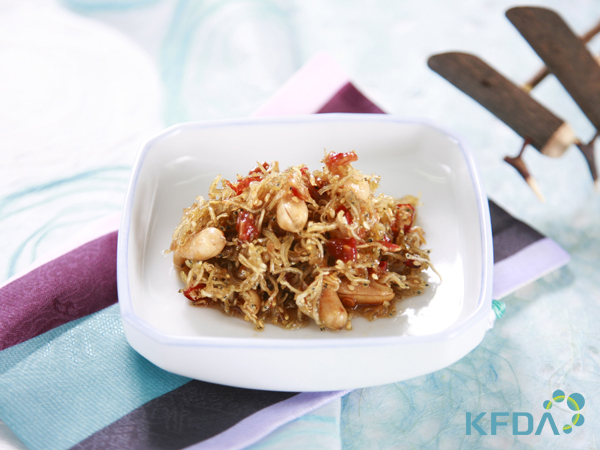
For the classic side dish, toast tiny anchovies in a dry pan to drive off moisture and fishiness, shake them in a sieve to remove the dust, then glaze them with syrup, soy sauce, garlic and nuts. They are also stir-fried with shishito-like chilies and ground into powder as a natural seasoning.
Nutrition and salt
Because they are eaten bones and all, small anchovies are rich in calcium. They are boiled in salted water before drying, though, so they are salty; toasting or a quick rinse helps.
🧊 How to store it
Keep them airtight in the freezer — at room temperature their oils go rancid.
🔄 Substitutes
For broth, use bonito flakes, or fish sauce with kelp; for a vegetarian broth, shiitake and kelp.
🛒 Where to buy
This is a fresh ingredient, so it is best bought in person at a Korean or pan-Asian grocery store such as H Mart, or through an online Asian grocer that delivers fresh produce in your area. Look for it under its Korean name, 멸치 (myeolchi).