Bibimbap with Soybean Powder Gochujang
콩가루비빔밥
Classic bibimbap with seasoned mung bean jelly, egg strips, cucumber, carrot, bracken, shiitake and beef, topped with a nutty gochujang sauce mixed with roasted soybean powder. Adding soybean powder to the gochujang reduces sodium while making it more savory.
🇰🇷 A twist on Bibimbap — see the classic korean mixed rice bowl recipe →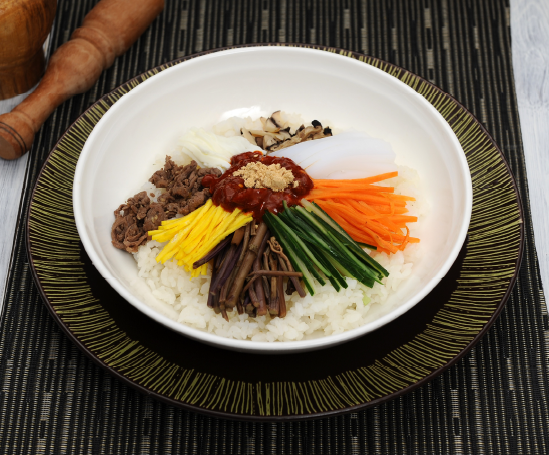
🥘 Ingredients
Tap an ingredient to check it off.
Main
Beef topping
Gochujang sauce
🧺 Korean ingredients in this recipe
- Sesame Oil & Sesame SeedsThe nutty finishing touch of Korean food🛒 Shop on Amazon
- Korean Wild Greens & Mountain RootsBellflower root, deodeok, bracken and dried greens
- Korean MushroomsShiitake, enoki, king oyster and other everyday mushrooms🛒 Shop on Amazon
- Korean Green Onions (Pa)Thick daepa, slender jjokpa and the green onions in almost every dish
- Garlic in Korean CookingMinced, sliced, pickled and black — the backbone of Korean flavor
- GochujangKorea's sweet, spicy fermented chili paste🛒 Shop on Amazon
- Soybeans & Black BeansYellow and black soybeans for rice, side dishes and cold soy milk noodles🛒 Shop on Amazon
As an Amazon Associate, coo K food earns from qualifying purchases.
📘 Cooking basics for this recipe
- How to Cook Korean Rice (Bap)Short-grain rice in a pot, a rice cooker or a pressure cooker, plus multigrain rice and nurungji
- Korean Sauce Basics: Marinades, Gochujang Sauce and Dipping SaucesThe core yangnyeom ratios behind bulgogi, bibimbap, tteokbokki and dipping sauces
- Korean Recipe Measurements: Spoons, Cups, Grams and SaltHow to read Korean recipe amounts, convert grams to spoons and choose the right salt
📝 Step-by-Step Instructions
Cut the mung bean jelly into 4 cm lengths and toss lightly with sesame oil and salt.

Separate the egg, add a pinch of salt to each part and cook into thin sheets.

Peel the cucumber in a spiral and julienne it, julienne the carrot to the same length, trim the bracken and julienne the shiitake.

Julienne the beef and season with the green onion, garlic, sesame oil and pepper.

Heat oil in a pan and stir-fry the vegetables and beef separately.

Mix the gochujang with the soybean powder and stir-fry it with the ground beef to make the sauce. Put the rice in a bowl, top with the jelly, vegetables, beef and egg strips, and finish with the gochujang sauce.

📊 Nutrition Facts (per serving)
Nutrition values are taken from the original recipe data and are approximate.
🎥 Watch Cooking Videos
▶Search “Bibimbap with Soybean Powder Gochujang” on YouTubeFind cooking videos, tutorials, and tips→Source: adapted from the recipe database of the Ministry of Food and Drug Safety of Korea (Food Safety Korea), used under the Korea Open Government License (KOGL) Type 1. English translation and editing by coo K food.
🍽️ You Might Also Like
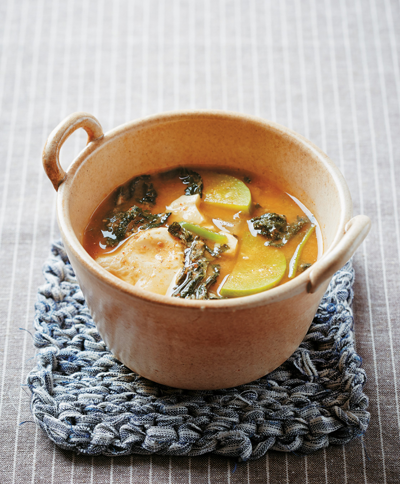
Mountain Greens Doenjang Stew
산나물된장찌개
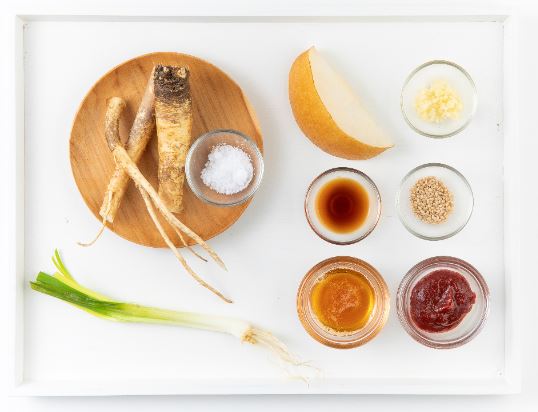
Grilled Whole Bellflower Root with Gochujang Glaze
통도라지양념구이
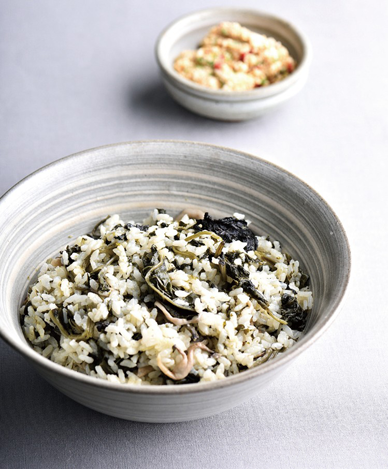
Gondre Mushroom Rice with Tofu Doenjang Sauce
버섯곤드레밥
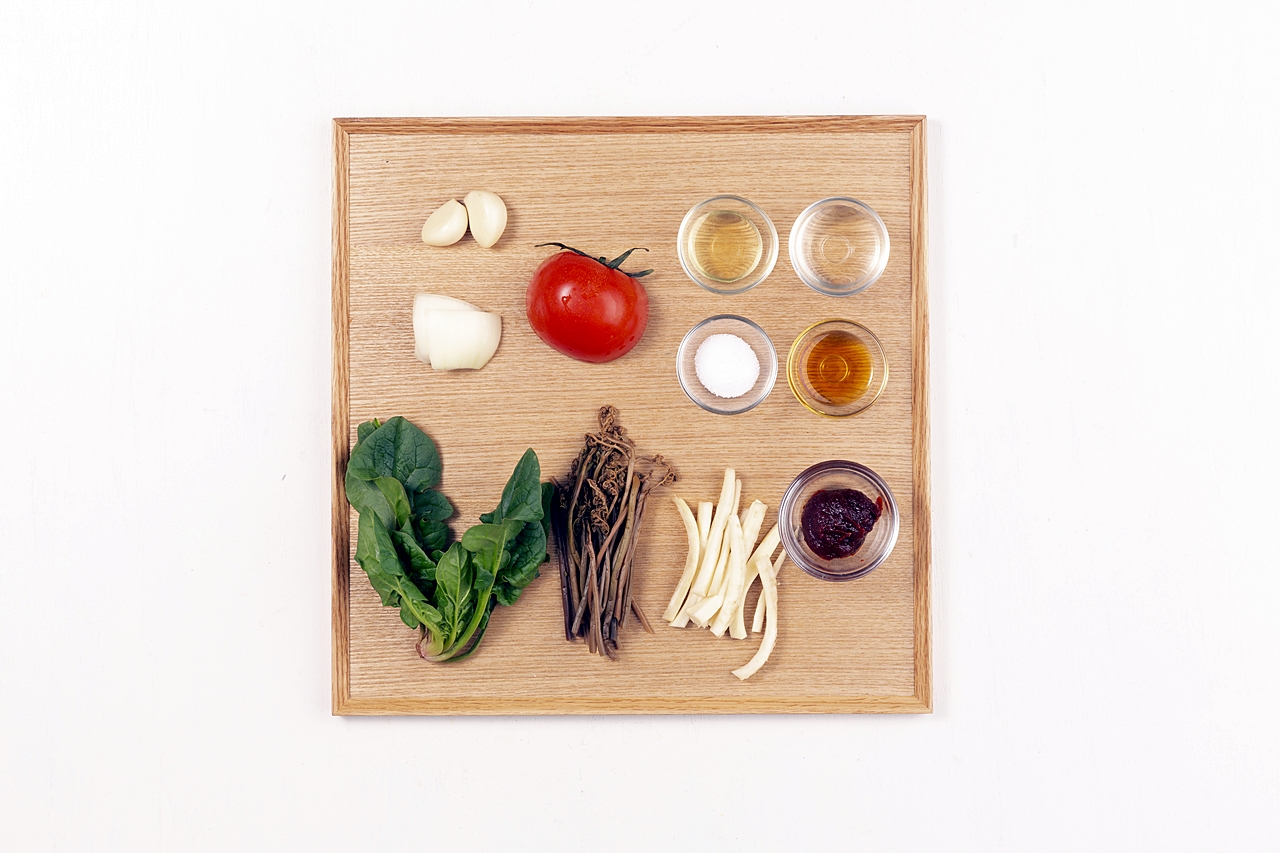
Three-Color Namul with Tomato Gochujang Sauce
삼색나물, 토마토양념장
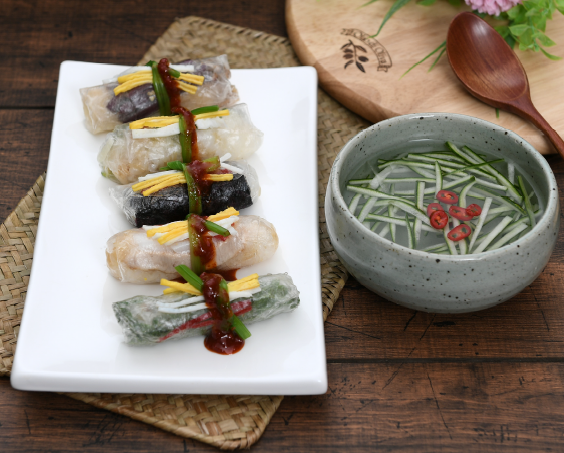
Five-Color Rice Paper Ssambap Rolls
오색쌈밥
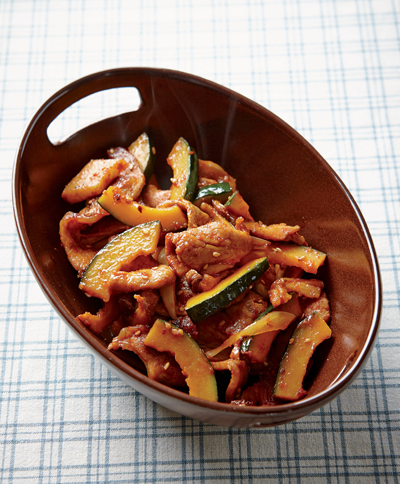
Spicy Pork Stir-Fry with Kabocha (Jeyuk-bokkeum)
단호박제육볶음