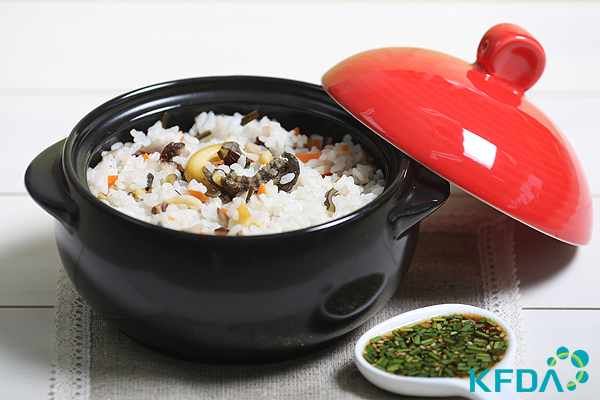
Abalone Nutrition Rice with Garlic Chive Sauce
전복영양밥과 부추양념장
Rice cooked in kelp broth with chopped abalone, mushrooms and carrot, served with a garlic chive and soy dipping sauce. To clean abalone, scrub the flesh with a brush, scoop it out from the thin side with a spoon and remove the innards and teeth; slice it on the diagonal so it doesn't slip.
🥘 Ingredients
Tap an ingredient to check it off.
Rice
Garlic chive sauce
🧺 Korean ingredients in this recipe
- Clams & ShellfishClams, mussels, oysters and abalone for clean, savory broths
- Korean MushroomsShiitake, enoki, king oyster and other everyday mushrooms🛒 Shop on Amazon
- Dried Kelp (Dasima)Kelp for clean, savory broth🛒 Shop on Amazon
- Garlic Chives (Buchu)Flat garlic chives for pancakes, kimchi and dumplings
- Korean Soy Sauce (Ganjang)Guk-ganjang, jin-ganjang and when to use each🛒 Shop on Amazon
- Korean Green Onions (Pa)Thick daepa, slender jjokpa and the green onions in almost every dish
- Garlic in Korean CookingMinced, sliced, pickled and black — the backbone of Korean flavor
- Sesame Oil & Sesame SeedsThe nutty finishing touch of Korean food🛒 Shop on Amazon
As an Amazon Associate, coo K food earns from qualifying purchases.
📘 Cooking basics for this recipe
📝 Step-by-Step Instructions
Simmer the kelp in 2 cups of water to make about 1½ cups of kelp broth.

Finely chop the used kelp and abalone meat.

Dice the shiitake, button mushrooms and carrot into 0.5–0.7 cm cubes.

Wash the rice, add the abalone, kelp and vegetables, pour in 1½ cups of kelp broth and soak for 30 minutes, then cook.

Chop the garlic chives and green onion and mix with the sesame oil, garlic, sesame seeds, kelp broth and soy sauce (1:1 broth to soy sauce) to make the sauce.

Serve the abalone rice with the chive sauce.

📊 Nutrition Facts (per serving)
Nutrition values are taken from the original recipe data and are approximate.
🎥 Watch Cooking Videos
▶Search “Abalone Nutrition Rice with Garlic Chive Sauce” on YouTubeFind cooking videos, tutorials, and tips→Source: adapted from the recipe database of the Ministry of Food and Drug Safety of Korea (Food Safety Korea), used under the Korea Open Government License (KOGL) Type 1. English translation and editing by coo K food.
🍽️ You Might Also Like
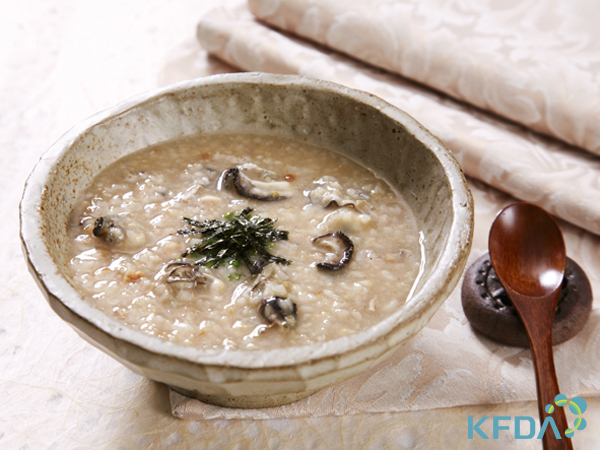
Nurungji Oyster Porridge
누룽지굴죽
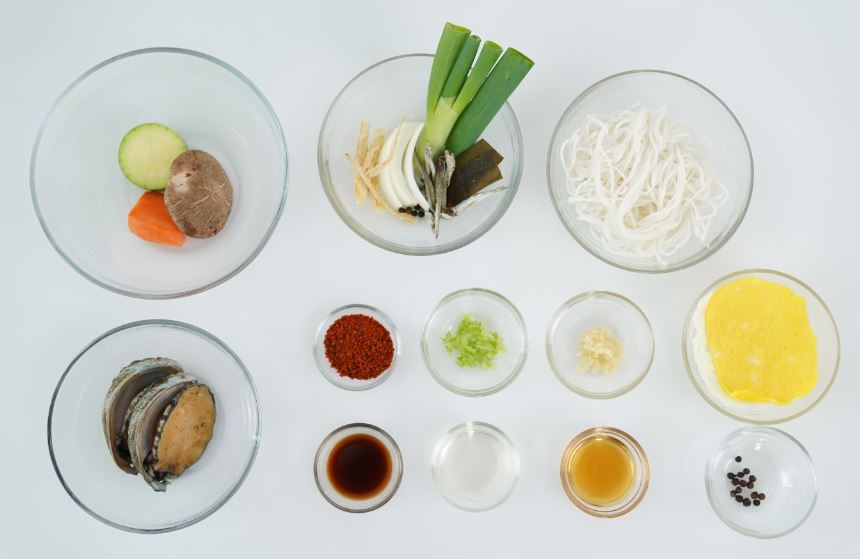
Low-Sodium Abalone Noodle Soup with Anchovy Sauce
멸치 전복 저염국수

Mushroom Soft Tofu Stew
버섯순두부찌개
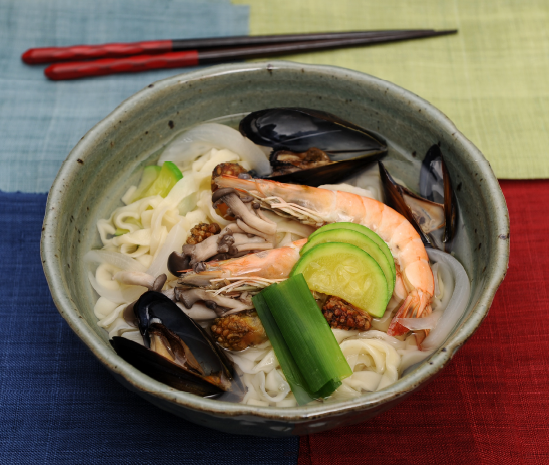
Homemade Seafood Kalguksu
해물칼국수
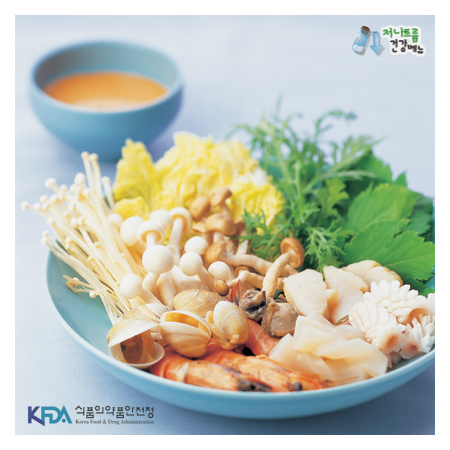
Seafood Shabu-Shabu with Sesame Peanut Dip
해산물 샤브샤브
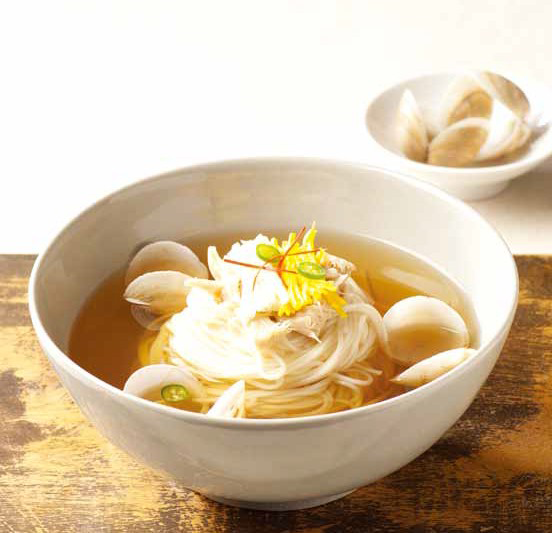
Glasswort & Shepherd's Purse Noodle Soup
함초 냉이 국수