How to Make Namul (Seasoned Vegetable Side Dishes)
나물
Blanch, squeeze, season: the method behind every Korean vegetable side dish
Namul is the Korean word for seasoned vegetables, and it covers a huge share of the banchan on a Korean table: spinach, soybean sprouts, mung bean sprouts, fernbrake, wild greens, radish and more. Almost all of them follow the same three moves. The vegetable is blanched briefly, squeezed dry, then tossed by hand with a small amount of seasoning and sesame oil. Once you know the method, you can turn almost any green into a side dish in ten minutes.
The basic method
Namul is meant to taste of the vegetable. The seasoning is light and the texture should stay fresh, so the two things to get right are the blanching time and how much water you squeeze out.
- Bring a large pot of water to a rolling boil and add a good pinch of salt (about 1 tsp per liter). Salted water keeps greens bright and seasons them lightly.
- Add the vegetable and blanch it for the time given below. Leafy greens need seconds, not minutes.
- Lift it out and plunge it into cold water, or rinse it under the cold tap, to stop the cooking and set the color.
- Squeeze out the water firmly with your hands. Greens should hold together in a compact ball without dripping.
- Loosen the ball, cut long greens into 4–5 cm lengths, and put them in a bowl.
- Add the seasoning, then the sesame oil and sesame seeds, and mix gently with your fingertips so the seasoning reaches every strand.
- Taste and adjust. Namul is served at room temperature or cool.
Blanching times by vegetable
Spinach (sigeumchi): 20–30 seconds, until just wilted. Drop it in root end first, since the stems take longer than the leaves. Shock it in cold water and squeeze well.
Soybean sprouts (kongnamul): 5–7 minutes with the lid on, in about 1 cup of salted water. Leave the lid closed until they are done. Opening the pot halfway through is said to give the sprouts a raw, grassy smell. Do not shock them in water. Spread them out to cool so they stay crunchy.
Mung bean sprouts (sukju): 1–2 minutes. They are thinner and more watery than soybean sprouts, so they go limp quickly. Rinse briefly in cold water and squeeze gently.
Other leafy greens (chard, crown daisy, aster, shepherd’s purse, minari): 30 seconds to 1 minute, depending on thickness. Taste a stem. It should be tender but still have a little bite.
Dried fernbrake (gosari) and other dried greens: they need soaking and simmering first. See the section below.
Three ways to season
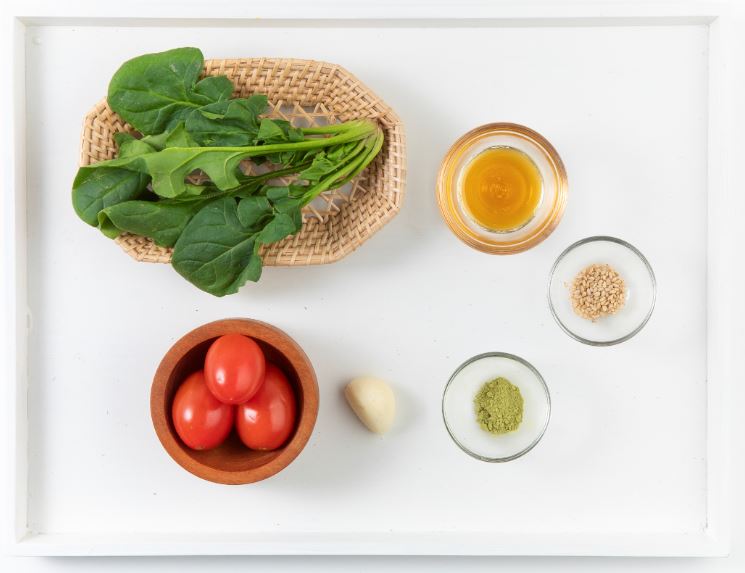
Soy sauce: the most common seasoning, especially for spinach, fernbrake and dried greens. Use soup soy sauce (guk-ganjang) if you have it. It is saltier and lighter in color than regular soy sauce, so the vegetable keeps its color. For 200 g of blanched spinach, 1 tsp soup soy sauce, ½ tsp minced garlic, 1 tsp sesame oil and 1 tsp toasted sesame seeds is a good starting point.
Salt: gives a cleaner, brighter result and is the usual choice for soybean and mung bean sprouts. Use about ⅓ tsp fine salt for 200 g of sprouts, with minced garlic, chopped green onion, sesame oil and seeds. Add a pinch of gochugaru for a red, spicy version.
Doenjang or gochujang: gives a deeper, earthier taste and suits strong greens such as chwinamul, shepherd’s purse or radish greens. Mix 1 tsp doenjang (or ½ tsp doenjang plus ½ tsp gochujang) with garlic, sesame oil and seeds, then toss.
Whatever the seasoning, add the sesame oil last. If oil coats the vegetable first, the salty seasoning slides off instead of soaking in.
Rehydrating dried namul
Dried fernbrake, dried radish greens (siraegi), dried aster and dried zucchini are traditional winter namul and appear on holiday tables and in bibimbap. They need to be rehydrated before seasoning:
- Rinse the dried greens, then soak them in plenty of water for at least 6 hours or overnight.
- Simmer them in fresh water for 20–30 minutes, until a stem is tender when pinched.
- Leave them to cool in the cooking water, then soak them again in fresh water for a few hours to remove any bitterness.
- Drain, squeeze lightly and cut out any hard ends.
- Season with soup soy sauce, garlic and perilla or sesame oil, then sauté in a pan for 5–7 minutes with a splash of water or broth until the flavors soak in.
Many Korean grocers sell fernbrake already soaked and boiled in vacuum packs. These only need a rinse before you season and sauté them.
💡 Tips
- Season lightly. You can always add more, and namul is eaten with rice, which needs the vegetable to be fresh rather than salty.
- Mix with your fingertips rather than a spoon. Light pressure spreads the seasoning evenly without bruising soft greens.
- Squeeze well. Leftover water dilutes the seasoning and makes namul soggy within hours.
- Most namul keeps 2–3 days in the fridge. Sprout namul is best on the day it is made.
- Make two or three namul from the same pot of water. Start with the mildest vegetable and finish with the strongest-tasting one.
- For bibimbap, season each namul separately so every topping keeps its own flavor.